Children's English: The British Institute Difference in Building the Communication Bridges of the Future
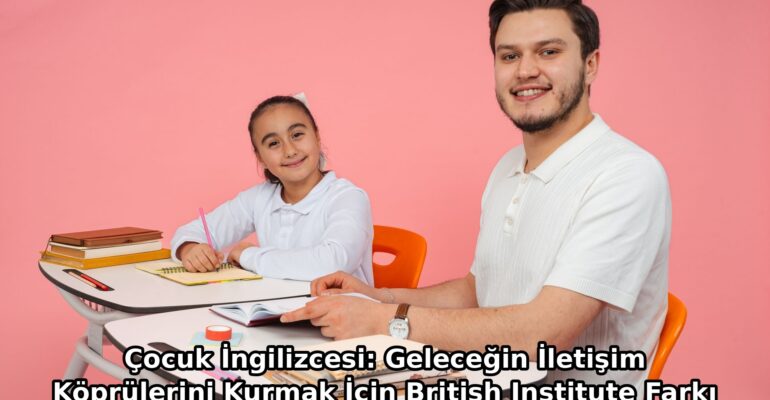
Children's English: The British Institute Difference in Building the Communication Bridges of the Future
Children's English: The British Institute Difference in Building the Communication Bridges of the Future
By laying the foundations of language learning at an early age, children’s English education is a critical step for children’s future success. At British Institute, we develop your children’s English speaking skills with face-to-face and live online lessons.
In today’s world, English has become an indispensable skill as a global means of communication. That is why starting to learn English at an early age offers children a wide range of opportunities in the future. At British Institute, we offer a specially designed primary school English course package so that your children can make a reliable start to their language learning adventure. With our expert teachers and under institutional assurance, we aim to maximise your child’s language development. Our goal is not just to teach vocabulary or grammar but also to enable children to speak English naturally and communicate.
Why Is Children's English Education So Important?
Childhood is a golden age for language learning. At these ages the brain is able to acquire new information much faster and more lastingly. Starting to learn English at an early age allows children to learn grammatical structures and pronunciation with a naturalness close to their native language. As British Institute, with the education we offer children during this critical period, we help them gain an important advantage in their future academic and professional lives. Language skills acquired at an early age help children understand different cultures, see the world from a broader perspective and become global citizens. Learning a second language also supports children's cognitive development and increases their problem-solving skills and creativity.
Our programmes are carefully prepared according to children’s age groups and interests. Thanks to our lessons supported by games, songs, stories and interactive activities, children experience learning English not as a boring task but as a fun adventure. This approach keeps children’s interest in lessons alive and increases their motivation to learn. At British Institute, each child’s individual pace and style of learning is respected. Our teachers offer personalised feedback and support to maximise every student’s potential. By guiding your children on their language learning journey, we aim to boost their self-confidence and encourage them to use English actively.
Primary School English Education with British Institute: A Speaking-Focused Approach
At British Institute, our top priority in primary school English education is developing children’s speaking skills. We know that language is not just about reading and writing skills but is also a means of communication that needs to be used actively. That is why, in our lessons, we create plenty of opportunities for children to speak English in an environment where they feel comfortable and safe. Our teachers encourage children to take part in dialogues, express their ideas and speak fluently.
Using modern, contemporary teaching materials, we enable children to practise through situations they may encounter in daily life. Thanks to role-play games, group work and interactive activities, children not only learn English from the coursebook but also gain experience of using it in real life. We also pay special attention to important elements of speaking such as pronunciation, stress and intonation. Our teachers give feedback to help children pronounce words correctly and encourage them to imitate. This way, children gain confidence when speaking English and develop the ability to communicate fluently.
British Institute’s primary school English programme aims for children not only to speak grammatically correctly but also to communicate in a culturally appropriate way. Children are encouraged to learn about the cultures of English-speaking countries, recognise different accents and develop a global outlook. This holistic approach helps children see English not just as a school subject but as part of their lives.
British Institute’s Distinctive Face-to-Face and Online Learning Models
At British Institute, we offer both face-to-face classroom and live online learning options to provide solutions suited to the different needs of families and children. Both models share the same high standard of education and the same expert teaching staff.
Face-to-Face Classroom Learning: Our face-to-face courses at our campuses offer a rich learning environment where children can socialise, interact with their peers and communicate directly with their teachers. Supported by classroom activities, group games and physical materials, these lessons make the language learning process more concrete and fun, especially for younger children. In this model, with its intensive student-teacher interaction, children are encouraged to overcome language barriers more quickly and speak with confidence.
Live Online Learning: Designed to make the most of the possibilities of the digital age, our live online courses remove geographical limitations and give families flexibility. Children who join live lessons with our expert teachers from the comfort of their homes enjoy an interactive learning experience thanks to modern educational technologies. Great importance is placed on developing speaking skills in online lessons too. Through group work, dialogues and games in the virtual classroom, children get the opportunity to use English actively. They can also easily access online learning materials to review lessons and consolidate their learning.
In both learning models, British Institute’s institutional trust and expert teaching staff guarantee that your children receive the best education. Our programmes are prepared in line with the Ministry of National Education curriculum and also take international language standards into account. Our aim is not only for children to learn English but also for them to enjoy the learning process and develop a lifelong love of languages.
Why Should British Institute Be Your First Choice?
There are many reasons why British Institute should be your first choice for your children’s primary school English education. Our institution stands out for its many years of experience in language education, its expert teaching staff and its student-centred approach. First and foremost, at British Institute we offer institutional trust. We put parents’ minds at ease with our quality of education, our pedagogical approaches and our student support services. It is very important that the institution to which you entrust your child’s education is built on solid foundations and offers a transparent learning process.
Our teachers are professionals who not only have a high level of English but also an in-depth knowledge of child pedagogy and the ability to communicate effectively with children. They use special techniques to make children’s language learning fun and productive. They understand each child’s individual needs and develop methods suited to their learning styles. This way, children take an active part in lessons and their motivation to learn increases.
At British Institute, we have a minimalist and futuristic aesthetic. By bringing together modern educational approaches, contemporary technologies and rich learning materials, we offer children an inspiring learning environment. Our programmes not only develop grammar and vocabulary but also support children’s critical thinking, problem-solving and communication skills. Most importantly, the fundamental aim of language education at British Institute is to enable children to speak English fluently and correctly. This special emphasis on speaking skills is the key to our children being able to express themselves comfortably on international platforms.
British Institute is not just a language school but also an educational partner guiding your children on the road to their future success. With us, your children learn English with enthusiasm, speak with confidence and open the doors to the world.
Frequently Asked Questions
What is the English word for "çocuk" (child)?
The English equivalent of the Turkish word “çocuğun” (the child’s) can vary depending on the context. It is usually used as “child’s” (the possessive form of child) or “the child’s”. For example, “çocuğun kitabı” is “the child’s book”. If we are talking about a parent’s child, expressions such as “his child” or “her child” can also be used. In addition, “children’s” (for plural children) or “kid’s” (a more informal expression) can also be used in general.
What is "çocuk" (child) in English?
The Turkish word “çocuk” has more than one equivalent in English. The most commonly used ones are:
- Child: A general and formal usage. It can be used for both boys and girls. (e.g. “A child is playing.” – Bir çocuk oynuyor.)
- Kid: An expression used mostly in everyday speech and informal settings. (e.g. “My kids love to swim.” – Çocuklarım yüzmeyi sever.)
- Infant: Used for very young babies, especially newborns or those up to one year old.
- Toddler: Usually used for children aged 1-3 who have just started walking.
The appropriate word should be chosen according to the context of the sentence.
What is the English for "çocuklar" (children)?
The English equivalent of the Turkish word “çocukların” (the children’s) is usually “children’s”. Since the plural of “child” is “children”, adding the possessive “-‘s” gives “children’s”. For example, the expression “çocukların oyuncakları” is translated as “children’s toys”. Expressions such as “the children” or “our children” can also be used. If we are talking about more than one child in an informal context, “kids’” (the possessive form of kids) can also be used.
What do you call a child in English?
In English, the Turkish word “çocuğa” (to the child) can be expressed in different ways depending on its purpose and position in the sentence. It is usually used as “to the child” or “to a child” in the sense of giving something to or directing something towards a person (a child). For example, even if the word “çocuğa” does not appear in the sentence “Ona bir hediye verdim.” (I gave him/her a gift.), in English it can be expressed as “I gave a gift to the child.” or “I gave the child a gift.” If the verb can take a direct object, “the child” or “a child” can be used as the direct object. (e.g. “I teach the child.” – Çocuğa öğretiyorum.)