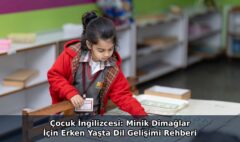
Children's English: A Language Development Guide for Primary School Children

Children's English: A Language Development Guide for Primary School Children
Children's English: A Language Development Guide for Primary School Children
This article is an informational guide. For the course itself: Children's English course package →
Primary school children have very strong language learning abilities, and children’s English education lays a critical foundation for their future academic and personal success. At British Institute, we offer face-to-face and live online lessons with expert teachers so that little ones can learn English and love it.
What Are the Benefits of Learning English for Children?
Reach your goal faster with Children's English
For children, learning English means much more than just acquiring a new language. Learning a language at an early age supports children’s cognitive development, improves their problem-solving abilities and broadens their cultural awareness. Bilingual children may have more flexible thinking skills than their monolingual peers, and their academic achievement may increase. In addition, in a globalising world, English is the key to communicating and accessing information. Thanks to British Institute’s carefully prepared programmes, children get the opportunity to learn English in a natural environment and through fun activities. This way, children not only memorise grammar rules but also gain the ability to use the language actively.
Why Is Learning English So Important at Primary School Age?
The primary school years are considered the golden age for children’s language learning. Children in this age range can learn a second language more easily and naturally, through mechanisms similar to those by which they acquired their mother tongue. Their pronunciation skills are more flexible and their ability to imitate new sounds is more developed. Learning English at an early age gives children great advantages in their later education and careers. For example, for children who want to study at international schools or universities, English proficiency is a requirement. With curricula designed specifically for primary school children, British Institute offers a learning experience suited to their age groups and interests. These programmes focus on developing the four core language skills (reading, writing, listening and speaking) in a balanced way.
How Are Speaking Skills Developed in Children's English Education?
The development of speaking skills is the foundation of British Institute’s philosophy of language education. In children’s English learning, active communication is prioritised over the passive accumulation of knowledge. Our expert teachers help children enjoy speaking English through methods such as interactive games, songs, storytelling and role-play activities. These activities create a safe environment in which children can make mistakes without fear and express themselves. For primary school children in particular, practice is the most effective way to internalise the language. Lessons at British Institute reinforce real-life communication skills by focusing on the words and sentence patterns children can use in daily life. For example, the primary school English course package supports children’s development in this area in the best possible way.
What Does British Institute Offer in Children’s English Education?
British Institute aims to be one of parents’ first choices in children’s English. With institutional trust and an expert teaching staff, children are offered both face-to-face classroom learning and live online lesson options. Lessons are divided according to children’s age and level groups, and an approach suited to each child’s individual pace of learning is adopted. Lessons are made more engaging through the use of modern, contemporary teaching materials. Our aim is not only to help children learn English but also to help them love learning and feel confident. In exam preparation, children are led to success with strategies that come with a score guarantee and precisely targeted question patterns. At British Institute, we are committed to standing by children at every step of their language learning journey.
How Do Live Online Children’s English Lessons Work?
British Institute’s live online children’s English lessons offer an interactive learning experience enriched by the possibilities of modern technology. The lessons are designed to be every bit as good as a real classroom, allowing children to interact with expert teachers one to one or in small groups from the comfort of their homes. The visual and auditory materials used in live lessons capture children’s attention and make learning fun. Thanks to games, songs and storytelling in the virtual classroom, children take an active part in the lesson and practise speaking English. The online option removes geographical limitations, giving children from all over Türkiye access to British Institute’s high-quality education. Parents can follow their children’s performance in lessons and observe their progress through regular feedback.
What Is the Approach to Children’s English in Face-to-Face Classroom Learning?
British Institute’s face-to-face classroom courses are a traditional and effective method that enables children to learn English while increasing their social interaction. Lessons held in modern, well-equipped classrooms in a child-friendly environment increase their motivation. Expert teachers enrich lessons by using different teaching techniques suited to each child’s learning style. In group lessons, children get the opportunity to learn together with their peers and develop their teamwork and communication skills. Face-to-face learning emphasises that language is not just an academic subject but a means of social communication. By practising speaking English with their teachers and friends, children get into the habit of using the language naturally in daily life. At British Institute, face-to-face lessons, like online lessons, prioritise the development of speaking skills and increase children’s confidence in English.
How Can Parents Support Their Children’s English Learning Process?
Parents’ active involvement in their children’s English learning process plays a critical role in success. First of all, it is important to create a positive environment around English at home. Encouraging children to watch English cartoons, listen to songs or play simple games in English can make language learning fun. By choosing an institutional and reliable educational institution such as British Institute, parents can ensure that their children learn from the right sources. It is also very beneficial to talk with their children about English and have them repeat the words and sentences they have learned. Encouraging children not to be afraid of making mistakes speeds up their language development. Regularly checking their children’s homework and staying in touch with the teachers at British Institute are important for following the learning process. With the support they show their children, parents can keep their children’s interest in and motivation for English alive.
What Should You Look for When Choosing the Best English Course for Children?
There are several important factors to consider when choosing the best English course for children. First of all, you should check whether the course’s pedagogical approach and curriculum suit children’s ages and developmental levels. British Institute offers an interactive, fun-focused curriculum that supports children’s natural learning processes. Secondly, the quality of the teaching staff is very important. Expert, experienced teachers who communicate well with children increase motivation to learn. British Institute has a carefully selected staff in this regard. Thirdly, the learning options the course offers (face to face, live online) and its flexibility should suit families’ needs. By offering both options, British Institute appeals to a wide audience. Institutional reliability and references should also be taken into account. British Institute stands out in this field with its long-established history and achievements. Finally, the importance given to speaking skills is a critical criterion for ensuring lasting results in language learning. With its speaking-focused approach, our institution enables children to use English actively. Taking all these elements into account, British Institute offers a comprehensive and reliable solution in children’s English education.
What Are the Features That Make British Institute Different in Children’s English Education?
British Institute stands out in children’s English education with its distinctive features. First of all, its expert, experienced teaching staff with pedagogical training manage children’s learning processes in the most productive way. Secondly, its institutional reliability and many years of experience give parents peace of mind when entrusting their children to it. Thirdly, by offering both face-to-face and live online options, it provides flexible solutions suited to the needs of every family and child. The modern technological infrastructure used in online lessons creates an interactive and fun learning environment. The special importance given to developing speaking skills ensures that children not only understand the language but also use it actively. In exam preparation, British Institute’s strategic approaches and precisely targeted question patterns help children achieve success. Aesthetic, contemporary teaching materials make lessons more appealing and understandable. At British Institute, we aim to offer the highest-quality, most modern English education to raise the successful individuals of the future.
How Do You Determine the Right Age and Start for Children’s English Education?
The right age and start for children’s English education depend on the child’s individual development and readiness. Although language experts generally point to the advantages of starting at an early age, the most important factor is the child’s willingness and interest in learning. British Institute recognises that the primary school years are an ideal time for children to start learning a language. At this age, children can more easily imitate new sounds and pronunciations and learn a second language more naturally, through mechanisms similar to those by which they acquired their mother tongue. However, since every child’s pace of learning and interest differ, it is important for families to observe their children and direct them into education when they are ready. British Institute experts can guide families in assessing their children’s potential for learning English. Our aim is for children to see language learning not as a burden but as a fun adventure full of discovery.
Frequently Asked Questions
What is the English word for "çocuk" (child)?
The English for “çocuk” is the word “child”. This word is used to refer to a single child. For example, as in the sentence “My child is learning English” (Turkish: Çocuğum İngilizce öğreniyor).
What do you call a small child?
A small child is usually called a “toddler” (a child who has just started walking), an “infant” (a baby) or a “young child” in English. In spoken language, terms of endearment such as “little one” or “kiddo” can also be used.
How do you write "çocuğu" (the child) in English?
In English, the word “çocuk” is written as “child”. Its plural is “children”, which is an irregular plural noun. For example, “One child” (Turkish: Bir çocuk) but “Many children” (Turkish: Birçok çocuk).
What is Kids English?
The word “kids” means “çocuklar” (children) in English and is a more common, informal synonym in everyday speech for “children”, the plural of “child”. It is generally used to refer to children aged 3-12.
Would you like to start right away?