The Transformative Impact of Online Education on Equal Opportunity and Accessibility
The Transformative Impact of Online Education on Equal Opportunity and Accessibility
The Transformative Impact of Online Education on Equal Opportunity and Accessibility
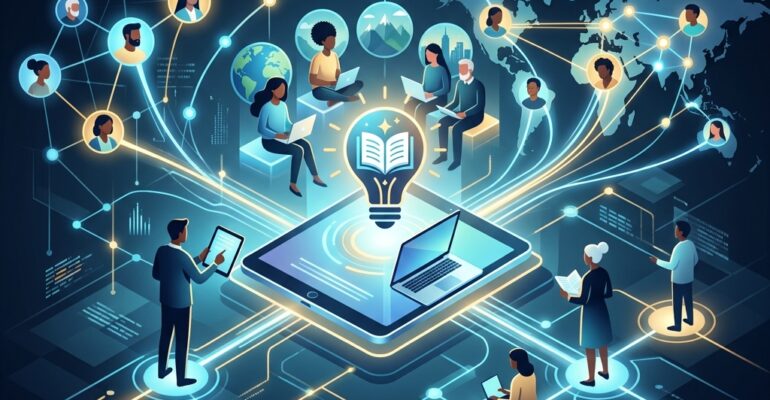
Education is the most fundamental building block of a society. However, physical, geographical and socio-economic constraints that have persisted for centuries have limited access to this building block to certain groups. Today, the rise of digitalisation and online education models has become the most powerful tool with the potential to break down these walls. Online education is not just a technological opportunity; it is a revolutionary step towards achieving equal opportunity in education.
Overcoming Geographical Barriers: A Gateway from the Countryside to the World
In traditional education models, living in a big city is usually a necessity to attend a quality school or course. In a country as vast as Turkey, it was almost impossible for a student living in a small district or village to access the facilities of a language school in central Istanbul. Online education has removed these distances and brought education into every home and onto every device.
Today, a student in a village in Erzurum and a student in central Ankara can receive world-class English education on the same platform, access the same materials and practise with the same Expert AI Teachers and tools. This geographical democratisation is online education’s most concrete achievement in terms of accessibility.
Socio-Economic Balances and the Digital Divide: Data from Turkey
Although academic research shows that online education increases inclusiveness in Turkey, there is still an obstacle ahead of us that we call the “digital divide”. Access to internet infrastructure and technological devices is directly linked to socio-economic status. However, the low-cost structure of online education offers a great opportunity to close this divide.
Once the overheads of a physical campus, travel expenses and material costs are taken out of the equation, education becomes economically accessible to much wider audiences. According to TÜİK (Turkish Statistical Institute) data, household use of information technologies increases every year, and the digitalisation of education is opening the door for low-income families to offer their children quality education too.
People with Disabilities and Inclusive Education: The Power of Online Learning
One of the most important topics that comes to mind when we talk about accessibility is the education of people with disabilities. For students with physical disabilities, the architectural shortcomings of schools, transport difficulties and the limitations of the classroom are major obstacles. Online education platforms allow these people to learn in their own comfort zone, at their own pace and with tools customised to their needs.
Thanks to subtitle options, voice commands and customisable interfaces, online education is the model closest to the ideal of “education for all”. At British Institute, we treat inclusiveness as a core value when developing our online platforms, and we offer an environment in which every individual can maximise their potential.
The Education Model of the Future: Hybrid and Accessible
The success of online education lies not in completely replacing traditional education but in integrating with it. Hybrid models combine the warmth of face-to-face communication with the limitless possibilities of digital. Thanks to personalised learning paths with Expert AI Teachers, a curriculum tailored to each student can be offered. This ensures that students with learning difficulties or gifted students do not “get lost” in the education system.
Conclusion: Fairness in Education Is Possible Through Digitalisation
Equal opportunity in education is not a favour but a fundamental human right. Online education gives us a unique technological foundation for making this right a reality. With infrastructure investments that will close the digital divide and the production of quality content, achieving fairness in education is no longer a dream. To build a world where everyone can access the best education, we must make technology our greatest ally.
At British Institute, we see digital transformation not just as technology but as part of our vision of equality and accessibility in education.
#OnlineEducation #EqualOpportunity #Accessibility #DigitalisationInEducation #FutureOfEducation