Preparing for the German B1 Exam: Tips for Passing the Goethe-Institut Exam
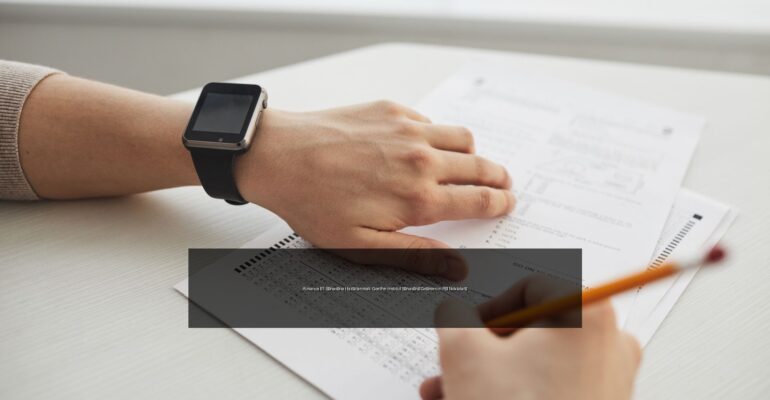
Preparing for the German B1 Exam: Tips for Passing the Goethe-Institut Exam
Preparing for the German B1 Exam: Tips for Passing the Goethe-Institut Exam
One of the most critical turning points in your German learning journey is undoubtedly the B1 exam. This exam plays a decisive role in job applications, immigration to Germany and academic career planning. So what does it really take to pass the Goethe-Institut B1 exam? Which strategies work, and which mistakes hold you back? In this guide, we offer a practical, actionable roadmap by looking at each of the four core sections of the exam one by one.
What Is the Goethe-Institut B1 Exam and Why Is It So Important?
The Goethe-Institut B1 certificate is an official, internationally recognised language proficiency certificate documenting the intermediate stage of the Common European Framework of Reference for Languages (CEFR). It is not just an exam result; it is proof of a concrete competence that opens doors for you in business, education and immigration.
This certificate, which is mandatory for residence applications in Germany, Austria and Switzerland, is also among the admission requirements of many universities in German-speaking countries. In Turkey, it offers an extremely valuable advantage in the job market, especially for German-speaking technical specialists and engineers.
The Structure of the Exam: Get to Know the Four Sections
The Goethe-Institut B1 exam consists of four core sections: Reading (Lesen), Listening (Hören), Writing (Schreiben) and Speaking (Sprechen). Each section is scored out of 25, and you need at least 60 out of a total of 100. But note: you must score at least 60 per cent (15 out of 25) in each section. Failing a single section may mean retaking the whole exam.
The Reading Section: Speed and Comprehension Strategies
Time management is a critical skill in the reading section. The section consists of five different subtests, and the total time is only 65 minutes. Many candidates struggle to manage this time because they try to read every text from start to finish.
The strategy recommended by expert instructors is this: read the questions first, then go back to the text. This approach lets you filter out unnecessary information and go straight to the answer. This method saves a great deal of time, especially in “Globalverstehen” (global understanding) questions.
B1 reading texts generally cover everyday life, travel, business and cultural topics. Getting into the habit of regularly reading German newspaper and magazine articles in these areas makes the exam process considerably easier. You can start with the simple news bulletins of publications such as Süddeutsche Zeitung and Der Spiegel.
The Listening Section: Understanding Accents and Taking Notes
The listening section is the part many candidates find most difficult, because different German accents may be heard in the recordings. An Austrian or Swiss accent may be surprising at first for someone used to standard German.
The most effective habit for success in this section is listening to German podcasts or radio for at least 15-20 minutes every day. Deutschlandfunk and Bayern 2 are ideal sources for this purpose. The importance of taking notes while listening should not be overlooked either; since the recording is played only once or twice, jotting down the key information makes it easier to reach the correct answers.
Another tip you can use during the exam is to read the questions carefully before the recording starts. This way you can decide in advance which information to focus on and make the listening process much more efficient.
The Writing Section: Structured and Fluent German
The writing section consists of two subtasks: writing a short message or email, and producing a text giving your opinion on a forum or social platform. The total time is 60 minutes, and word count targets are usually specified.
There are three key elements that determine your score in this section: completeness of content, grammatical accuracy and range of vocabulary. Simply forming basic sentences is not enough; a command of conjunctions, transition phrases and a variety of tenses sets you apart from other candidates.
Try this method for writing practice: each week, write a 150-200 word text on a different topic and review it with a German instructor. Having your errors corrected systematically stops you from making the same mistakes again. The value of getting professional feedback in this process is indisputable.
The Speaking Section: Confidence and Strategy
The speaking section of the B1 exam often stands out as the most stressful stage. In this section, held in groups of two or three, candidates are expected to present a topic, ask questions and take part in a discussion.
Remember: examiners are looking for communication skills, not perfect pronunciation. Not knowing a word exactly will not hold you back as much as trying to describe that word in different ways will earn you credit. Phrases such as “Ich meine damit…” (What I mean by this is…) or “Das ist so etwas wie…” (It is something like…) help you fill the gaps.
The most effective method for speaking practice is to hold regular oral sessions with a real instructor. Here, our German course programmes, structured around one-to-one speaking practice, offer an ideal foundation for candidates preparing for the B1 exam. Getting instant feedback in a face-to-face learning environment dramatically boosts your speaking confidence in a short time.
A 30-Day Pre-Exam Preparation Plan
Creating a structured study schedule with one month to go before the exam significantly increases your chances of success. Here is a basic framework:
Week 1 — Diagnosis and Gap Analysis: Work through past exam papers and identify the section in which you score lowest. This week is built around gathering information and pinpointing weak spots.
Week 2 — Intensive Grammar Revision: Review the grammar topics frequently tested at B1 level: Konjunktiv II, passive structures, subordinate clause word order after conjunctions and reported speech. Do at least 30 exercises for each topic.
Week 3 — Integrated Skills Development: Put a different skill in the spotlight each day, but do not drop the others entirely. The focus this week: practising the four skills in a balanced way.
Week 4 — Full Exam Simulations: Do full-length practice tests that mimic real exam conditions. Time yourself, observe yourself and consolidate your stress management skills.
Online Preparation: Flexibility and Efficiency Combined
For those who have to prepare for the exam alongside a busy work or school schedule in Istanbul, the online training option offers great flexibility. Live online lessons, which remove the time spent travelling to and from class, deliver the same quality of content and instructor interaction in a comfortable setting.
Our German online course programmes deliver exactly the same curriculum as face-to-face training through live video sessions. You can choose between group lessons and one-to-one sessions and access lesson recaps whenever you like. This flexibility is extremely valuable, especially for candidates who travel regularly or live outside the city.
Common Mistakes and How to Avoid Them
The most common B1 preparation mistakes observed by experienced instructors are:
Only memorising vocabulary: Vocabulary is important, but words that are not used in context are quickly forgotten. Learn every new word within a sentence and use it actively in your writing practice.
Neglecting grammar: In particular, the distinction between Dativ and Akkusativ and the word order used with conjunctions such as “weil”, “dass” and “obwohl” are frequently tested in the exam. Make these structures automatic.
Putting off speaking: The thought “I’ll start speaking when I’m more ready” is nothing but a trap. Speaking skills only develop by speaking. The earlier you start, the more you improve.
Not taking mock exams: Never trying the real exam format leads to surprises in the actual exam. At least two full simulations are a must.
Exam Day: Mental Preparation and Practical Tips
Staying calm on exam day directly affects your performance. A few practical suggestions:
Arrive at the exam centre at least 30 minutes early; this gives you a chance to get used to the setting and reduce unnecessary stress. In the speaking section, do not let the other candidate’s mistakes affect you; keep your focus on your own performance. In the reading and listening sections, do not hesitate to skip questions you are unsure of and come back to them later; using your time effectively is a critical advantage. And most importantly: you do not have to be perfect. Sixty out of a hundred is enough to pass.
Frequently Asked Questions
How long does it take to prepare for the Goethe-Institut B1 exam?
The answer to this question depends on your current level of German. To move from A2 to B1, an average of 150-200 hours of intensive study is recommended. With a regular, structured programme, this can be spread over 3-4 months.
Which section of the B1 exam is the hardest?
Although it varies from candidate to candidate, statistically the lowest scores are in writing and speaking. Because these two sections require active language production, passive memorisation is not enough to prepare for them.
How much is the exam fee and where is the exam held?
In Turkey, the Goethe-Institut B1 exam is held at official exam centres in Istanbul, Ankara and Izmir. For current fee information, it is advisable to check the official website of Goethe-Institut Turkey; fees are updated annually.
Which materials are recommended for the exam?
The Goethe-Institut’s official sample exam books should be your main reference. In addition, the “Mit Erfolg zum Goethe-Zertifikat B1” series and Cornelsen’s B1 preparation books are widely used. However, using these materials under the guidance of a professional instructor makes the learning process much more productive.
Can I retake the exam if I fail?
Yes, you can retake the exam as many times as you like. However, the option to retake only the sections you failed may vary by exam session and centre; it is advisable to call the relevant centre in advance about this.
The German B1 exam is an achievable goal that can be overcome with the right strategy and a consistent study routine. Remember: this certificate is not just about passing an exam; it means being able to really speak a language. And when you reach that point, the number of doors that open will surprise you.