The Advantages and Innovative Aspects of Personalised Language Courses with British

The Advantages and Innovative Aspects of Personalised Language Courses with British
The language learning process differs according to each individual’s own learning style, pace and needs. Taking these differences into account, British offers every student a personalised learning experience.
The personalised language courses offered by British speed up students’ language learning while also boosting their motivation. In this article, we will look at the advantages and innovative aspects of British’s personalised language courses and how they make the language learning process more efficient.
1. What Is Personalised Language Education?
At British, personalised language education is a teaching model that optimises individuals' language learning process with a student-centred approach. British offers a customised curriculum suited to each student's language level, learning speed, learning goals, interests and schedule. This makes the learning process smoother and more effective. This approach offered by British is supported by course content shaped around student needs, digital learning materials, one-to-one lessons and applications with Expert AI Teachers.
1.1. What Is the Difference of British Personalised Language Education?
Unlike traditional language teaching methods, British takes students' individual differences into account. Instead of a classic curriculum, it offers a special learning plan based on each student's personal learning goals and language level. This student-centred approach of British ensures both faster and more effective progress in the language learning process.
2. Advantages of British Personalised Language Courses
The personalised language education offered by British not only speeds up the learning process but also increases students’ motivation and engagement. Here are the main advantages of the personalised education model of British Language Schools:
2.1. It Offers a Student-Centred Approach
At British, personalised language education takes each student’s learning style into account and is structured specifically around the individual needs of the student. As a result, the student learns with content tailored to their own interests and goals and shows greater commitment to their language studies.
2.2. It Increases the Pace of Learning
With the British personalised education model, every student has the chance to progress at their own pace. They can spend more time on the topics they find difficult and move quickly through those they learn easily. This increases efficiency in the language learning process and allows students to reach their target language level in a short time.
2.3. It Keeps Motivation High
British makes the learning process more enjoyable by offering content tailored to students’ interests. For example, a student interested in art is given content using artistic terms, while a student who wants to learn the language for the business world is given business terminology. In this way, students get the chance to apply what they learn in daily life and keep their motivation high.
2.4. Content Suited to Language Level
At British, the learning process is made more efficient by offering content that matches the student’s current language level. No time is wasted on unnecessary or overly simple content, so students can keep learning without interruption.
2.5. Progress Tracking and Feedback
At British, each student’s language learning process is closely monitored through regular feedback. The student’s strengths and areas for improvement are identified, so support can be given by focusing on the topics where they are lacking.
3. Innovative Approaches to Language Education with British
British Language Schools use the latest technologies in their personalised education processes to offer students a comprehensive and effective learning experience. British makes language learning more accessible with innovative tools such as applications with Expert AI Teachers, data analytics, mobile apps and virtual reality. Here are the innovative approaches that stand out in the personalised education offered by British:
3.1. Applications with Expert AI Teachers
Using applications with Expert AI Teachers, British Language Schools analyse each student’s language level, pace of learning and the topics where they are lacking. British’s Expert AI Teacher applications suggest special exercises on the topics students find difficult and give them the opportunity to reinforce what they have learned.
3.2. Progress Tracking with Data Analytics
British optimises the language learning process by analysing each student’s learning data. Data analytics identifies the grammar topics where the student is weak, offers additional exercises in those areas and provides the student with personal development plans.
3.3. Flexible Learning with Mobile Apps
By offering mobile apps that support personalised education, British Language Schools make language learning accessible to students anytime, anywhere. This way, students can make language learning part of their daily lives and keep up their progress.
3.4. Real-Life Scenarios with Virtual Reality
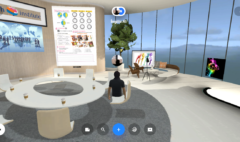
British enables students to develop their language skills using virtual reality technology. By experiencing real-life scenarios in virtual reality, students prepare for the dialogues they may encounter in daily life. For example, they get the chance to practise with scenarios such as ordering at a restaurant or speaking in a job interview.
3.5. Social Learning and Language Partnerships
British Language Schools adopt a social learning approach and give students the opportunity to practise communication through language partnership activities. By practising speaking in the foreign language, students consolidate what they have learned and gain self-confidence.
4. Techniques Used in British Personalised Language Education
British Language Schools combine a number of innovative techniques in the personalised language education process to help students develop their language skills. Here are the main personalised education techniques used at British Language Schools:
4.1. Adaptive Learning
British supports the learning process by adapting lesson content to the student’s level and pace. The adaptive learning technique reinforces the student’s strengths while allowing them to focus more on the areas where they are lacking.
4.2. Microlearning
At British Language Schools, the microlearning technique allows students to engage in the language learning process through short but effective learning sessions. Students with busy schedules in particular get the opportunity to improve their language skills in short sessions every day thanks to this technique.
4.3. Interactive Learning Materials
British Language Schools encourage students to take an active part in lessons with interactive learning materials. This way, students speed up the learning process by immediately applying the grammar rules they have learned.
4.4. Instant Feedback and Assessment
British Language Schools give students instant feedback, allowing mistakes to be corrected straight away. This helps students avoid picking up incorrect habits and makes the language learning process more effective.
Conclusion: Achieve Success with Personalised Education at British Language Schools
With its personalised language education programmes, British offers students an effective, innovative and student-centred language learning process. British Language Schools help students develop their language skills using the latest technologies such as applications with Expert AI Teachers, data analytics, mobile apps and virtual reality. British