The TOEFL Exam: The First Step on the Road to International Success
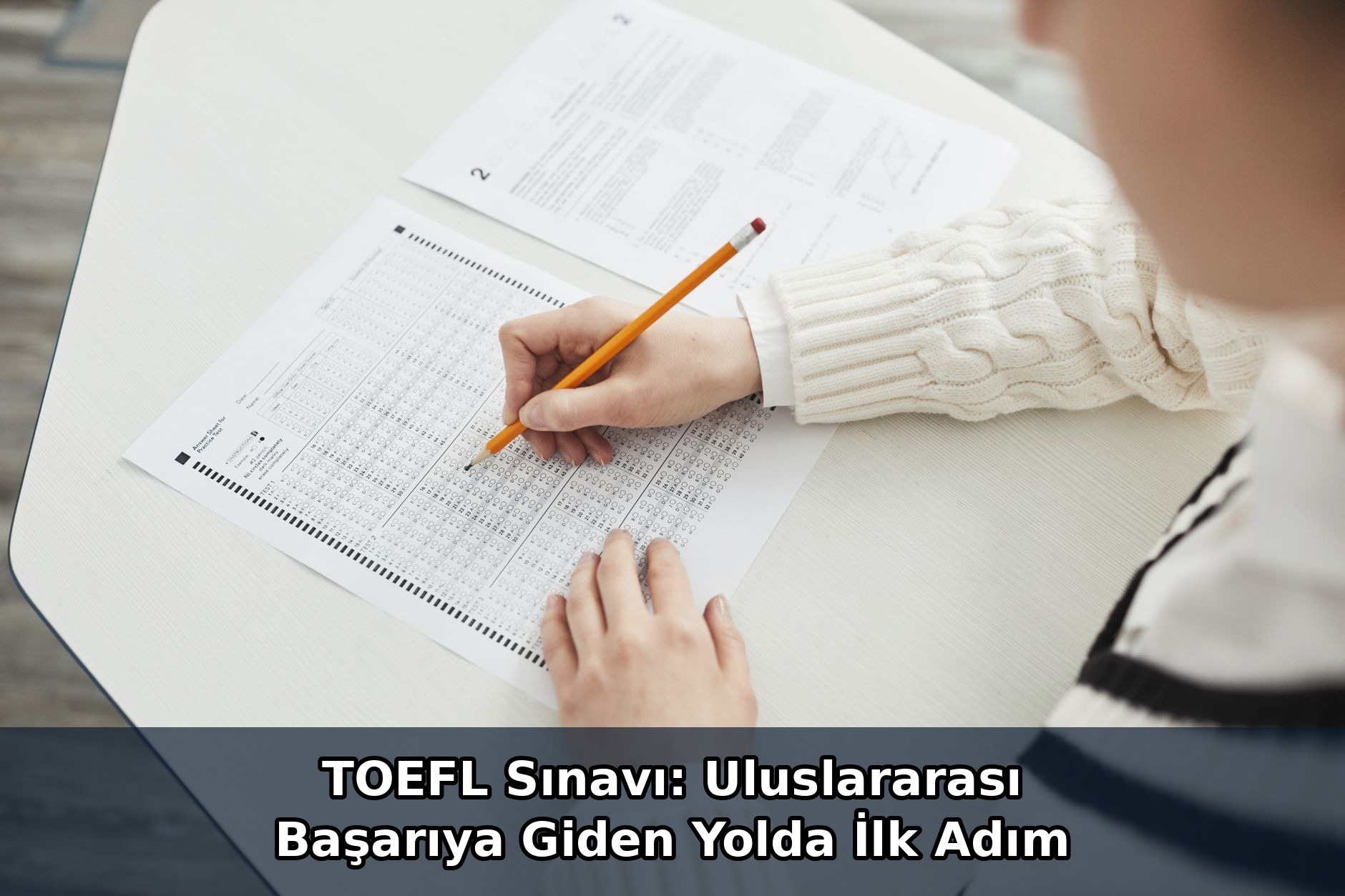
The TOEFL Exam: The First Step on the Road to International Success
The TOEFL Exam: The First Step on the Road to International Success
This article is an informational guide. For the course itself: TOEFL course package →
The TOEFL is a critical step towards reaching your global career and education goals. This guide provides all the information you need, from the exam structure to the preparation process.
What Is the TOEFL Exam and Why Is It Important?
Reach your goal faster with TOEFL
View the TOEFL course packageThe TOEFL (Test of English as a Foreign Language) is an internationally recognised exam that measures the academic and professional English proficiency of non-native speakers of English. Accepted by thousands of universities, employers and institutions worldwide, this exam serves as a gateway, especially for those who want to study or work in English-speaking countries. Delivered in the TOEFL iBT (internet-Based Test) format, the exam assesses four core language skills: reading, listening, speaking and writing. A high TOEFL score shows not only your English proficiency but also how serious you are about reaching your goals on the international stage.
Who Can Take the TOEFL Exam?
There is no age or education requirement to take the TOEFL. Anyone whose native language is not English and who wants to prove their English language proficiency can apply for this exam. It is especially ideal for:
- Students who want to study at university or postgraduate level abroad.
- Professionals aiming to work for international companies.
- People who will apply for immigration or visas in English-speaking countries.
- Language learners who want to assess their own level of English objectively.
What Are the Structure and Sections of the TOEFL Exam?
The TOEFL iBT consists of four main sections, each measuring specific language skills. Each of these sections imitates language-use scenarios you may encounter in a real academic environment. The exam lasts less than 2 hours in total.
- Reading: In this section, candidates are given 3-4 academic texts taken from university textbooks and are expected to answer questions about them. The texts usually cover a variety of subjects such as science, history and art. The aim is to measure the ability to understand academic texts, extract main ideas, grasp details and use vocabulary.
- Listening: In this part, you listen to various audio recordings of university lectures and campus conversations. Candidates are asked to answer questions about what they have heard. Lectures and conversations are usually 3-5 minutes long. Listening skills focus on understanding main ideas and details, and interpreting the speaker’s intention and intonation.
- Speaking: This section assesses the candidate’s ability to speak English. There are 4 tasks in total. Candidates are asked to speak on a given topic or to give their views on a text they have read or listened to. Elements such as fluency, pronunciation, grammar and use of vocabulary are assessed in the speaking section.
- Writing: The writing section consists of two main tasks. In the first task, you are expected to write a summary of a text you have read and a lecture you have listened to. In the second task, you write an independent essay presenting your personal views or arguments on a given topic. This section measures the candidate’s ability to express their ideas clearly, coherently and with grammatical accuracy.
Each section is scored from 0 to 30, giving a total score between 0 and 120. Approaching each section of the exam strategically is critical to achieving a high score.
What Should the TOEFL Preparation Process Look Like?
An effective TOEFL preparation process varies according to individual needs and current level of English. In general, however, certain steps should be followed for successful preparation. First, it is very important to determine your current level of English. This helps you understand which areas you need to focus on more. After that, a strategic study plan should be created for each section of the exam. Reading academic articles is useful for developing your reading skills, and listening to podcasts and TED talks helps with listening. Speaking skills can be developed through one-to-one practice with British Institute’s expert teachers or with the TOEFL preparation private lesson package metaverse live lesson options. For writing skills, writing practice essays regularly and getting feedback is essential. Taking practice exams helps you develop your time management skills and become familiar with the exam format. Getting support from an institution such as British Institute offers you the learning model that suits you best, with both face-to-face classroom and live online teaching options. While the teaching you receive with expert teachers focuses on developing your speaking skills, it offers a score guarantee thanks to exam strategies and targeted question patterns. With our modern, contemporary approach to teaching, we promise a minimalist, forward-looking learning experience with broad, aspirational appeal.
What Are the Strategies for Raising Your TOEFL Score?
Raising your TOEFL score is possible through a combination of disciplined study and the right strategies. First of all, it is important to understand the particular dynamics of each section and develop suitable techniques. Time management and key-word strategies in the reading section, and note-taking techniques and the ability to understand the speaker’s intention in listening, are critical. In the speaking section, using fluent, clear language and building sentences with correct pronunciation and grammar is essential. In the writing section, presenting your arguments in a logical order and using varied vocabulary and complex sentence structures will raise your score. British Institute offers you strategies designed especially for you with its expert teachers. Supported by targeted question patterns and real exam practice, these strategies guide you to your goal. With the importance we place on developing speaking skills, we offer practice that helps you express yourself more comfortably in the exam. Remember, taking regular practice exams and learning from your mistakes is the key to your progress.
Frequently Asked Questions
How much does the TOEFL exam cost in TL?
The TOEFL exam fee varies depending on the country where the exam is taken and the time period. To find out the current exam fee for Turkey, it is advisable to follow the official TOEFL website of ETS (Educational Testing Service) or announcements from authorised institutions such as British Institute. As exam fees may be updated from time to time, it is best to check the latest information before applying.
Is IELTS or TOEFL harder?
The question of whether IELTS or TOEFL is harder may vary according to personal perceptions and learning styles. Both exams have their own challenges and advantages. The TOEFL iBT is fully computer-based, while IELTS (International English Language Testing System) offers both computer-based and paper-based options, and its speaking section is conducted face-to-face with a person. TOEFL is weighted more towards American English and has an academic focus, while IELTS covers both academic and general English and leans more towards British English. Some candidates find a computer-based exam more comfortable, while others may prefer interacting with a person. To determine which exam suits you better, you can take practice tests and examine the format of both exams in detail. British Institute offers expert preparation programmes for both exams.
What TOEFL score is B2 level?
The TOEFL iBT score range corresponding to B2 level is generally between 72 and 94. There is an official mapping table between the Common European Framework of Reference for Languages (CEFR) levels and TOEFL scores. B2 level represents "upper-intermediate" proficiency: being able to communicate in most academic and professional situations in an English-speaking environment, understand main ideas and cope with complex texts. This score range is regarded by many universities and institutions as an acceptable level of proficiency.
What is TOEFL, and who can take it?
TOEFL (Test of English as a Foreign Language) is an internationally recognised exam held to measure the English language proficiency of people whose native language is not English. It is especially important for those who want to study or work abroad. There are no age or education restrictions; anyone who wants to prove their English proficiency can apply. The exam assesses academic English skills (reading, listening, speaking, writing) and is accepted by thousands of universities and institutions worldwide.
Would you like to start right away?
View the TOEFL course package