The 7 Most Effective Ways to Teach Children English: What Do the Experts Say?
The 7 Most Effective Ways to Teach Children English: What Do the Experts Say?
The 7 Most Effective Ways to Teach Children English: What Do the Experts Say?
The big question on every parent’s mind: “How do I teach my child English?” And not just teach it, but in a way that makes them love it, makes it last and builds it on the right foundations. Because a language learned at an early age becomes a key that opens up the world for your child in later years. So which methods really work, and which are just a waste of time and money? In this guide, prepared in the light of the views of experts with years of experience in language education and current research, you will find the 7 most effective proven methods for children aged 5 to 16.
1. Starting Early: Why Is the Brain More Ready in Childhood?
Linguists and neurologists have long emphasised this: the human brain can acquire new languages much more quickly and lastingly during a stage called the “critical period”, especially between the ages of 3 and 12. A language learned during this period is processed almost like a mother tongue. Phonetic structures settle more naturally, grammar becomes intuitive and pronunciation is extremely clean.
However, starting early is not enough on its own. Education that starts early but continues with the wrong methods can create reluctance and even fear of the language in the child. That is why the question of “how” is just as critical as the question of “when”.
2. Game-Based Learning: No Lasting Learning Without Fun
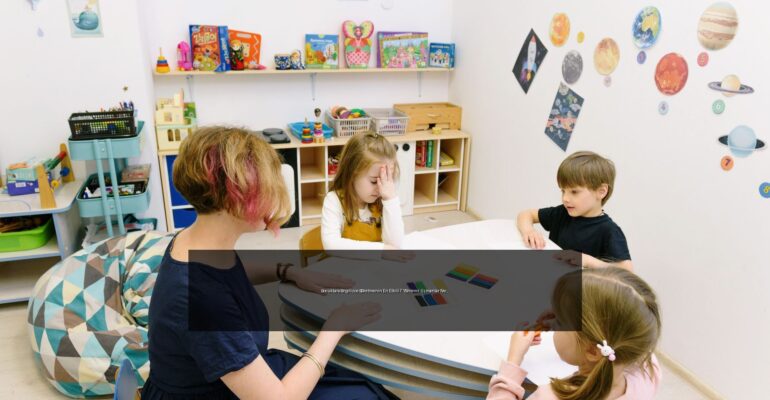
Children are naturally curious to learn. However, what feeds this curiosity is not boring repetition but experiences gained through discovery and play. In game-based language education, children learn new words and structures through role-play games, storytelling, drama, music and creative art activities.
Research shows that information learned during play stays in the memory much longer than information learned through the classic repetition method. The main reason is that play triggers emotional involvement. Emotionally charged memories leave deeper traces in the brain.
For example, instead of having a child read the word “apple” from a card, guiding them to buy an apple in a shopping game dramatically increases how quickly and how permanently the word is etched into their memory.
3. Focusing on Speaking Skills: The Power of Real English Sounds
Many families are pleased when they see that their children can memorise words or get good marks in grammar tests. Yet true language competence means being able to speak, respond instantly and express yourself naturally. Written success does not guarantee spoken fluency.
That is why a high-quality children’s English course should put speaking practice at the centre of the curriculum. The amount of speaking time per student is one of the most decisive indicators of teaching quality. Before your child starts a course, be sure to ask this question: “How many minutes of active speaking will my child do per lesson?”
Live question-and-answer exercises, story-completion tasks and paired dialogues led by expert teachers are activities that rapidly develop a child’s ability to organise and express their thoughts in English.
4. Finding the Right Level: Neither Too Hard nor Too Easy
If your child meets material that is too difficult on their first day of class, they will be disappointed. If they meet content that is too easy, they will be bored. In both cases, motivation drops. Psychologist Mihaly Csikszentmihalyi’s “flow theory” explains this very well: learning is most productive when a fine balance is struck between the level of difficulty and the child’s ability.
To strike this balance, high-quality language schools give children a comprehensive level assessment at the start. This assessment should cover not only grammar knowledge but also listening comprehension, verbal expression and learning style.
5. Repeated Exposure: Bringing English into Daily Life
Language learning continues not only in the classroom but also in everyday life. Your child having at least 20–30 minutes of organic contact with English a day significantly increases their speed of learning. Practical ways to achieve this include:
- English cartoons: Watching their favourite characters in English develops listening skills and a feel for pronunciation.
- English audiobooks: Interactive audiobooks with visual support reinforce both reading and listening.
- Simple daily routines: Short English sentences such as “Good morning”, “Time for breakfast” and “What’s the weather today?” turn your home into a small language environment.
- English music: Children’s songs and rhythmic music expand vocabulary without the child even noticing.
In this exposure process, the parent’s language level is not decisive. What matters is that the child forms a regular and enjoyable bond with English.
6. Face-to-Face or Online? Which Is More Effective?
This question has been asked more often in recent years, and the answer is more nuanced than you might think. Each format has its own strengths.
Face-to-face learning brings social interaction, body language and classroom dynamics into play. When children talk to one another, a real communication environment is created. This is extremely valuable, especially for building confidence in speaking.
Live online learning offers flexibility, accessibility and a comfortable learning environment. Because children feel more at ease in their own space, they can sometimes participate more boldly. It also allows parents to follow the process closely.
What matters is that the chosen format includes a “live teacher”. Passive learning based only on apps or watching videos does not build real language competence. If you want to teach your child English, a structure with one-to-one or small-group interaction with a teacher is essential.
7. Expert Teacher Support: The Difference Between Amateur Guidance and Professional Teaching
The difference between someone who knows English and someone who can teach English has a big impact on a child’s learning journey. An expert teacher trained in child psychology, language acquisition processes and teaching methods for children does not just pass on a language; they manage motivation, take individual differences into account and notice learning barriers and help overcome them.
Especially in primary school English education, the emotional bond and trust between teacher and child are far more decisive than academic success. Children learn more easily from people they trust. That is why an institution’s teacher quality and pedagogical approach are the first criteria you should consider when making your choice.
Language Education in the Primary School Years: Closing the Gap with School English
Although English lessons in Türkiye’s school curriculum are starting at ever younger ages, school English falls short for many children due to reasons such as crowded classes, limited lesson hours and insufficient individual attention.
A high-quality supplementary programme does not just follow the school curriculum; it builds the child’s confidence in speaking, strengthens their spoken and written expression and lays a solid foundation for preparing for international exams in later years.
If you are looking for a programme that makes a real difference for your child, British Institute’s English for children programmes, with expert teachers, a game-based methodology and both face-to-face and live online learning options, are specially designed to meet this need.
The Secrets of Keeping Your Child’s Motivation Alive
Even the best method, the best teacher and the best institution will not deliver results when a child’s motivation drops. So how do you keep that motivation alive?
- Celebrate small successes: Make a big deal of achievements like “I learned 5 new words today”. The brain wants to repeat rewarded behaviour.
- Set goals, but be realistic: Concrete, achievable goals such as “Let’s learn 50 words this month” increase motivation.
- Connect with their interests: Does your child love dinosaurs? Watch dinosaur documentaries in English. Football? Listen to English football commentary together.
- Don’t worry about mistakes: Making mistakes is an integral part of children’s learning. Instead of criticising mistakes, adopt a “That was nearly right!” attitude.
Frequently Asked Questions
What is the ideal age to teach my child English?
In terms of brain development, the most productive period is between the ages of 5 and 10. But this doesn't mean older children can't learn. Very fast progress can also be made between the ages of 11 and 16 with the right methods. What matters is less when you start than how you progress.
How many hours of lessons a week are enough on a children's English course?
Experts recommend at least 3-4 hours of structured language education a week. In addition, the total time should be increased with 15-20 minutes of relaxed daily exposure (films, music, books).
Is online English education as effective as face-to-face?
Online education with a live teacher is almost as effective as face-to-face learning. Programmes consisting of passive video watching cannot be counted in this category. Make sure the online programme you choose is live and interactive.
What should I do if my child doesn't want to go to the course?
First, the reason for the resistance to the course should be investigated. Boring methods, a curriculum unsuited to their age or a weak bond with the teacher are the most common reasons. Switching to a game-based, fun programme that touches on the child's interests usually solves the problem.
What is the most suitable way for primary school children to learn English?
For primary school age (6-10), game-based learning, storytelling, songs and drama techniques are among the most effective methods. For this age group, spoken interaction should be prioritised over written grammar.
How does British Institute’s English programme for children stand out from the rest?
British Institute stands out with specialised teachers, a play-focused methodology grounded in child psychology and the flexibility of both face-to-face and online live learning. The programme focuses not only on academic success but on speaking confidence, creative expression and lasting language competence.