Why Is Now the Right Time to Learn Arabic? The Language That Makes a Difference in Business and Travel
Why Is Now the Right Time to Learn Arabic? The Language That Makes a Difference in Business and Travel
Why Is Now the Right Time to Learn Arabic? The Language That Makes a Difference in Business and Travel
At a time when the world economy is being reshaped and trade routes are changing fundamentally, learning not just any language but the right language is becoming a decisive advantage. With the huge investments in the Gulf countries, the expanding business markets of the Middle East and its millions of speakers, Arabic is no longer just a cultural curiosity; it is a concrete tool for career and income. So why is now exactly the right time to seize this opportunity in Türkiye?
Arabic: The Big Opportunity the Numbers Reveal
Arabic has more than 420 million native speakers worldwide and is one of the six official languages of the UN. The combined GDP of Saudi Arabia, the United Arab Emirates, Qatar, Kuwait and the other Gulf countries has long since passed the trillion-dollar mark. For Turkish entrepreneurs and professionals doing business with these countries, knowing Arabic means no longer depending on an interpreter, building trust and managing deals directly in their own language.
The picture on the tourism front is also striking. The number of Arab tourists coming to Türkiye has broken records in recent years. In Istanbul, Antalya and Cappadocia, Arabic-speaking guides, hotel staff and business owners earn much more than their competitors. The value of an Arabic-speaking professional in the job market is being felt ever more clearly in Türkiye.
The Ways Arabic Is Not Difficult: Facts That Will Boost Your Motivation
Many people perceive Arabic as a distant and incomprehensible language. Yet a few basic facts can change this perception completely:
- Shared vocabulary with Turkish: Hundreds of words in Turkish are of Arabic origin. Words you use frequently in daily life, such as “kitap” (book), “kalem” (pen), “hesap” (account), “dükkân” (shop) and “ticaret” (trade), actually come from Arabic. This gives Turkish students a significant head start.
- A logical root system: Arabic has a root-based structure. Learning one root makes it easier to grasp dozens of words derived from the same root. This system is a great help for students who think systematically.
- Modern Standard Arabic is universal: Although the dialects differ from one another, Modern Standard Arabic (MSA) is used as the language of business, media and diplomacy throughout the Arab world. For those who want to learn with a focus on trade and communication, this means learning a single language.
Arabic as a Language of Trade: The Secret of Those Who Do Business in the Gulf
When you talk to Turkish businesspeople who set up stands in Dubai, present projects in Riyadh or look for partners in Abu Dhabi, one common point stands out: the side that speaks Arabic always makes faster progress. There are several concrete reasons for this:
Cultural connection and trust: In the Arab business world, personal relationships come before contracts. Even saying a few sentences in the other person’s language strengthens this trust. Saying “Marhaba” or “As-salamu alaykum” instead of “Merhaba” opens doors much faster.
Negotiation advantage: In meetings conducted through an interpreter, loss of information and wasted time are inevitable. A professional who speaks Arabic can react instantly in negotiations, grasp nuances directly and communicate more effectively.
Local regulations and documentation: Official correspondence in the Gulf countries is mostly in Arabic. A professional who understands contracts, invoicing systems and legal documents minimises their dependence on local partners.
Arabic When Travelling: The Language That Transforms the Experience
The Arabic-speaking world covers a vast cultural area stretching from Morocco to Oman and from Sudan to Syria. For travellers visiting these regions, knowing Arabic turns a tourist experience into a genuine cultural discovery.
Being able to bargain in the medina of Marrakesh, explore Petra in Jordan with local guides or chat over coffee in Egypt… These are the moments that make a trip leave lasting memories. What is more, a traveller who speaks Arabic avoids tourist traps much more easily and takes part in the local experience much more deeply.
An Arabic Course in Istanbul: Why Is Professional Teaching Essential?
Trying to learn Arabic with apps and video content works up to a certain point, but a structured course is indispensable for real progress, especially for the following reasons:
- Pronunciation: Arabic’s guttural sounds and the phonemes that do not exist in Turkish cannot be acquired correctly without working with an expert instructor one to one or in a live online setting.
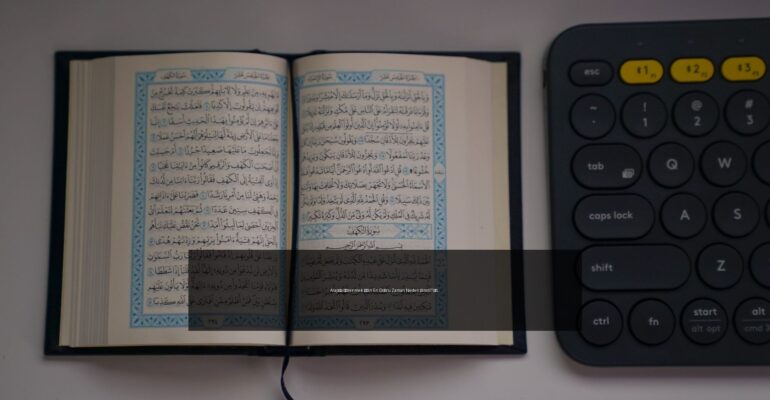
- Writing system: The Arabic alphabet, written from right to left, with its joined letters and vowel marks (harakat), is one of the hardest elements to learn without visual guidance.
- Speaking practice: The most critical element in language learning is speaking skill. Without real-time speaking practice, passive vocabulary knowledge never turns into active communication.
For these reasons, those who choose an Arabic course can enjoy a learning experience that suits their own rhythm of life, with both face-to-face classroom and live online lesson options. British Institute’s expert instructors aim to help students of every level develop practical Arabic competence they can use in trade, travel and everyday communication.
Which Level Should You Start From?
One of the most common mistakes in learning Arabic is joining a programme directly without a level assessment. Starting at the right level both prevents wasted time and keeps motivation high.
Beginner (A1–A2): The alphabet, basic vocabulary, greetings and introductions, numbers and everyday expressions. The goal at this stage is to get used to Arabic sounds and script and to understand and build simple dialogues.
Intermediate (B1–B2): Business meetings, commercial correspondence, travel scenarios and following the news. At this level, grammatical structures deepen and sentence building becomes fluent.
Advanced (C1–C2): Negotiation, presentations, academic reading and writing. Students at this level, who use Arabic as a fully professional tool, can take their place in the Arab business world as equal counterparts.
Practical Suggestions to Speed Up the Arabic Learning Process
Outside your course, some habits you can integrate into your daily life will significantly speed up your learning process:
- Watch Al Jazeera or Al Arabiya: These channels use Modern Standard Arabic. Even a habit of listening for 15 minutes a day makes a noticeable difference in a short time.
- Listen to Arabic music: Rhythm and melody are among the most powerful ways to embed words in the subconscious.
- Use flashcard apps: Studying 10 new words every day lets you build a vocabulary of 3,650 words in a year. This number is more than enough for basic communication.
- Practise with Arabic speakers: There are many Arabic speakers in Türkiye. Do not miss real opportunities to speak.
Why British Institute?
For years, British Institute has stood out as a trusted name in language teaching in Türkiye. The features of its Arabic programmes that particularly stand out are:
- Curriculum design focused on trade and communication
- Intensive speaking practice in small groups
- Uninterrupted teaching both in physical classrooms in Istanbul and on a live online platform
- Experienced Arabic instructors who are specialists in their field
- An approach to institutional reliability that keeps it the first choice
If you want to make a difference in your career, your working life or your travels, taking the right step towards learning Arabic is now much easier. With both face-to-face and online options, there is certainly a starting point that suits your schedule.
Frequently Asked Questions
How long does it take to learn Arabic?
An average of 6-12 months of regular study is enough to reach a level of basic communication. For commercial or professional competence, this can extend to 1-2 years. Weekly lesson hours and the intensity of individual study directly affect this process.
Which Arabic dialect should I learn?
Modern Standard Arabic (Fus’ha) is ideal for business, media and official communication. If you work with a particular country, it may also be useful to pick up that region’s dialect; however, MSA always offers safe common ground.
Is the Arabic alphabet hard?
The Arabic alphabet, consisting of 28 letters, takes different forms depending on context and is written from right to left. Although it seems challenging at first, with regular practice most learners learn to read and write the alphabet within a few weeks.
Is an online Arabic lesson as effective as face-to-face?
When run on the right platform with a real-time instructor, live online lessons offer effectiveness comparable to face-to-face learning. British Institute’s live online lessons are designed to meet these standards.
Does knowing Arabic give an advantage in job applications?
Absolutely. Especially in the foreign trade, tourism, logistics, banking and consultancy sectors, candidates who speak Arabic are clearly preferred in job listings. In companies with Gulf connections, this advantage is even reflected in salary differences.
Can I Start Without Knowing Any Arabic?
Yes. There are beginner programmes specially designed for students starting from scratch. You can progress with a structured curriculum starting from the alphabet, without any prior knowledge.