The Future of Language Learning: A Look at Metaverse Education
The Future of Language Learning: A Look at Metaverse Education
An Introduction to the Concept of the Metaverse and Its Impact on Education
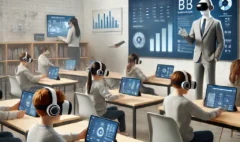
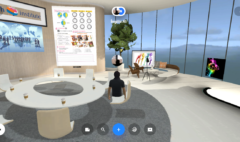
The concept of the metaverse is an exciting new development in the world of technology that is poised to revolutionise many sectors, including education. Essentially, the Metaverse is a collective virtual shared space, created by the convergence of virtually enhanced physical reality, in which users can interact with a computer-generated environment and with other users. Imagine a world where students immerse themselves in a 3D virtual classroom, interacting in real time with teachers and peers from all over the world. This is the potential impact of the Metaverse on education. It offers a transformative approach to language learning, making it more engaging and interactive and thereby improving the overall learning experience.
The Current State of Language Learning: Traditional Methods and Their Limitations
Traditional language learning methods usually involve textbooks, classrooms and rote memorisation. Although these methods have proven effective to some extent, they have their limitations. They often lack real-world context, which makes it difficult for learners to apply their knowledge outside the classroom. What is more, these methods often do not cater to individual learning styles, which makes the process tedious for some. The pace of learning is usually set by the curriculum rather than the learner, which can lead to frustration and a lack of motivation. Finally, with traditional methods, learning a new language can be a lonely journey with limited opportunities for interaction and speaking practice.
Understanding Metaverse Education: The New Frontier in Learning
Metaverse Education is the emerging frontier in learning, and in language education in particular. It is the concept of a virtual reality space in which users can interact with a computer-generated environment and with other users. It offers exciting potential for language learning because it provides immersive, interactive experiences that can significantly enhance the learning process. Learners can apply their language skills in real-world scenarios, interact with native speakers and learn cultural nuances in a safe and controlled environment. The Metaverse offers endless possibilities for personalising and enhancing the language learning experience, making it a promising trend in education.
Integrating Language Learning into the Metaverse: How Does It Work?
In the metaverse, language learning takes a more immersive and interactive turn. Instead of traditional methods, learners can practise new languages in simulated environments by holding real-time conversations with virtual characters or other learners. It works with technologies such as virtual reality (VR) and augmented reality (AR) and offers realistic scenarios for practical language use. For example, you might be ordering food in a French café or asking for directions in Spanish in a virtual city. This interactive approach to learning not only makes language learning more fun but also improves retention and fluency. The metaverse offers endless possibilities for a more effective and engaging language learning experience in the future.

The Benefits of Learning a Language in the Metaverse
Learning a new language in the Metaverse has many benefits. For beginners, it offers an immersive, interactive experience that can significantly enhance language acquisition. Learners can virtually travel to different countries, interact with native speakers and experience the culture first-hand, all from the comfort of their own homes. This level of immersion can lead to faster and more effective language learning. In addition, the metaverse provides endless resources and learning materials, making it easier for learners to develop and improve their language skills. It also allows personalised learning experiences that cater to individual learning styles and paces. With these advantages, language learning in the metaverse is set to revolutionise the way we learn languages in the future.
Case Studies: Successful Examples of Metaverse Language Learning Programmes
In the blog post “The Future of Language Learning: A Look at Metaverse Education”, we examine fascinating case studies of successful metaverse language learning programmes. One such example is Mondly, an augmented reality app that immerses learners in realistic scenarios and develops their language skills in an engaging environment. Another is Minecraft: Education Edition, which is used to teach English to non-native speakers by creating interactive lessons in the game’s virtual world. These programmes not only make language learning more enjoyable but also offer a more immersive, practical experience than traditional methods. With its interactive 3D environments, the metaverse is proving to be a game changer in language education, offering more effective and engaging learning experiences.
Potential Challenges and Solutions in Metaverse Language Learning
In the field of metaverse language learning, there are several potential challenges learners may face. First, technical issues such as unreliable internet connections and a lack of user-friendly interfaces can hinder the learning process. Second, the absence of face-to-face interaction can lead to reduced engagement and motivation. However, these challenges can be addressed with effective solutions. Stable internet connections can be ensured through reliable service providers, while user-friendly interfaces can be developed with the help of advanced technology. In addition, interactive elements such as games and quizzes can be built into learning modules to increase engagement and motivation. So, despite the challenges, metaverse language learning offers an exciting new frontier in education, with enormous potential for innovation and improvement.

The Future of Language Learning: Predictions and Possibilities in the Metaverse
The future of language learning could be revolutionised by the Metaverse, a virtual reality space in which users can interact with a computer-generated environment and with other users. This could open up new and immersive ways of learning languages. Imagine practising French in a virtual café in Paris, or learning Japanese while exploring a digital replica of Tokyo, all from the comfort of your home. These experiences could make language learning more engaging and realistic, speeding up your progress. What is more, the Metaverse could make it easier to interact with native speakers around the world and provide real-time practice and feedback. The Metaverse therefore has enormous potential to transform language education, making it more interactive, fun and effective.
Preparing for the Transition: How to Get Ready for Metaverse Language Learning
Preparing for the transition to metaverse language learning involves a few basic steps. First, you need to get to know the metaverse environment. This virtual reality space may be a new concept for many, but spending time exploring it will make the learning process smoother. Next, make sure you have the necessary equipment, such as a VR headset, a good internet connection and a compatible device. Finally, stay open-minded. Metaverse language learning is a blend of technology and education that provides immersive, interactive experiences. It may differ from traditional learning methods, but it also opens up new and exciting ways to acquire language skills.
Conclusion: Embracing the Future of Language Learning in the Metaverse.
In conclusion, the future of language learning in the Metaverse is a promising and exciting prospect. This immersive, interactive environment offers learners rich opportunities, making education more engaging, accessible and personalised. As we move forward, it is very important to embrace these changes and adapt our learning strategies to take advantage of the benefits of this technological revolution. Although the journey may be challenging, the potential rewards make it a worthwhile endeavour. So let us prepare for a future in which we learn new languages not only through textbooks but also through interactive virtual experiences in the Metaverse.